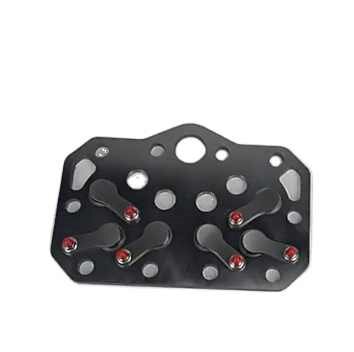
Source valve plate for Air Compressor, Refrigeration, Industrial Use
Find 30 valve plate options for air compressors, refrigeration systems, and industrial applications. Compare specifications, certifications, and prices from verified suppliers to identify the right component for your equipment needs.
Key considerations
Products List


$100.00 - $400.00
Moq: 1




Comprehensive Sourcing Guide
Strategic Sourcing Guide for Industrial Valve Plates
Procuring valve plates is a critical component in the maintenance and optimization of industrial compression systems. These components serve as the heart of reciprocating compressors, regulating the flow of gas or refrigerant to ensure efficient operation. For procurement professionals, the market presents a complex landscape where product attributes vary significantly between manufacturers. The following guide synthesizes observed market data to provide a disciplined approach to sourcing, focusing on technical verification, compliance, and supplier evaluation without relying on unverified claims.
Technical Specifications and Component Variability
The first step in sourcing valve plates is understanding the diverse technical specifications available in the current market. Observed product data indicates that valve plates are not monolithic; they exist in various forms tailored to specific machinery. The product model numbers observed range widely, including identifiers such as 31#, 09WM, JS000456, JS000458, JS000510, and 250042-298. Additionally, some listings reference specific compressor series like 4TES, 4PES, 4NES, 4HE, and 6GE, suggesting that compatibility is often tied to the specific engine or compressor architecture.
Material composition is another critical technical variable. While some products are described as "Sintered Metal," others are associated with specific packing standards like "Denso Packing" or general "Carton Box" and "Wooden Box" packaging, which may imply different handling requirements or internal material densities. The physical dimensions also vary, with observed standard sizes including 202010cm, while other entries list a particle size of 1 or a maximum pressure rating of 1. Buyers must verify that the specific model number and material type align precisely with their existing equipment, as a mismatch can lead to catastrophic seal failure or reduced compression efficiency.
Compliance and Certification Verification
Navigating the certification landscape for valve plates requires careful scrutiny of the documentation provided by suppliers. The market data reveals a mix of certification claims, ranging from broad ISO standards to specific regional and industry certifications. Observed certifications include ISOStandard Component, ISOCE, CE, CCC, CCCF, GS, and GB8013-2005. It is essential to distinguish between general component standards and specific product certifications. For instance, while "ISOStandard Component" is listed, other entries specify "ISOCE" or the Chinese national standard "GB8013-2005."
Buyers should not assume that a single listing satisfies all regulatory requirements for their region. The presence of "CE" and "CCC" (China Compulsory Certification) suggests compliance with European and Chinese safety standards, respectively, but the specific applicability depends on the end-use location. Furthermore, the distinction between "Standard Component" and "Non-Standard Component" is critical. Some products are explicitly labeled as "Non-Standard Component," while others are "Standard Component." This classification dictates whether the part is an off-the-shelf item or requires custom engineering. Procurement teams must request valid, current certificates for the specific batch of goods being purchased, rather than relying on generic claims found in product descriptions.
Cost Drivers and Pricing Structures
Understanding the cost drivers for valve plates involves analyzing the relationship between customization, volume, and material specifications. The observed price range in the market is extremely broad, spanning from $0.05 to $99,999. This variance is likely driven by the scale of the order, the complexity of the part, and the specific material composition. A generic valve plate for a small refrigeration compressor may fall at the lower end of this spectrum, while a custom-engineered, high-pressure sintered metal component for an industrial air compressor could command a significantly higher price.
Minimum Order Quantity (MOQ) is another significant factor influencing unit cost. Data shows an MOQ range from 1PC to 10,000 units. Suppliers offering an MOQ of 1PC are likely targeting maintenance, repair, and operations (MRO) markets, where small batches are necessary. Conversely, suppliers requiring high MOQs are typically geared toward OEM production runs. The "Customized" attribute is also a major cost driver. While some listings indicate "Customization: Available" and "Customized: Customized," others state "Non-Customized." Customization inevitably increases the unit price due to the setup costs and specialized tooling required. Buyers should anticipate that non-standard, custom-molded, or sintered metal parts will carry a premium over standard, mass-produced components.
Typical Applications and Equipment Compatibility
Valve plates are specialized components designed for specific operational environments. The observed data highlights two primary application sectors: refrigeration compressors and industrial air compressors. One listing explicitly categorizes the usage as "Refrigeration Compressor parts," while another specifies "Industrial Air Compressor." This distinction is vital because the operating pressures, temperatures, and gas compositions differ significantly between these two fields.
The "Applicable Equipment" field in the data points to "Air Compressor" as a general category, but the specific model numbers (e.g., 4TES, 6GE) suggest compatibility with specific compressor models. Additionally, the "Category" field includes "Dry Machine," indicating that some valve plates are designed for dry compression applications where moisture control is a priority. Buyers must match the valve plate's intended usage with their specific machinery. Using a valve plate designed for a refrigeration unit in an industrial air compressor, or vice versa, can lead to premature wear, seal failure, or safety hazards. The "Condition" of the parts is consistently listed as "New," which is a baseline expectation for industrial components, but the "Single Gross Weight" varies between 1.0 Kg and 2kg, reflecting differences in size and material density.
Supplier Evaluation and Origin Analysis
When evaluating potential suppliers, the geographic origin of the product is a key data point. The observed data indicates that the primary place of origin is China, with specific mentions of Henan and Jiangsu provinces. These regions are known for their manufacturing capabilities in industrial machinery and components. However, the origin alone does not guarantee quality. Buyers should verify the supplier's track record in these specific regions and their ability to maintain consistent quality control.
The "Brand Name" field shows a mix of proprietary and generic branding, including "Shangair 09wm/Cwm" and "Elite." The presence of a specific brand name can be a proxy for quality assurance, but it is not a guarantee. Some listings do not provide a brand name, instead focusing on the model number or the "Standard Component" status. A critical evaluation metric is the "Video Outgoing-Inspection" attribute, which is listed as "Provided" in some cases. This feature allows buyers to visually verify the condition and packaging of the goods before shipment, reducing the risk of receiving damaged or incorrect items. Additionally, the "Warranty" period of "1 Year" is a standard offering that provides a baseline level of protection for the buyer.
Quality Control and Packaging Standards
Quality control in the valve plate market is often reflected in the packaging and inspection protocols. The data reveals a variety of packaging types, including "Carton Box," "Wooden Box," "Cardboard Box," and "Carton or According to Client's Request." The choice of packaging can indicate the fragility of the component and the supplier's attention to detail. For instance, "Wooden Box" packaging is often used for heavier or more critical components to prevent damage during transit, while "Carton Box" may be sufficient for smaller, lighter parts.
The "prod_packing" attribute varies significantly, suggesting that buyers should not assume a standard packaging method. Some suppliers offer "Denso Packing," which may imply a specific protective standard, while others allow for custom packaging requests. The "Single Gross Weight" of 1.0 Kg to 2kg provides a baseline for shipping calculations, but the actual weight can vary based on the specific model. Buyers should explicitly request packaging specifications in their purchase orders to ensure that the components arrive in a condition suitable for immediate installation. Furthermore, the "Video Outgoing-Inspection" service is a valuable quality control tool that allows for real-time verification of the product before it leaves the factory.
Long-Term Procurement Considerations
Sourcing valve plates is not just a transactional activity but a strategic decision that impacts long-term operational efficiency. The "Customization" attribute, which is listed as "Available" in some cases, suggests that buyers can work with suppliers to develop bespoke solutions for unique equipment needs. However, this also introduces complexity in terms of lead times and supply chain management. The "Standard Component" vs. "Non-Standard Component" distinction is crucial here; relying on standard components can simplify the supply chain, while custom components may require longer lead times and higher inventory buffers.
The "Warranty" of 1 Year is a standard term, but buyers should consider the total cost of ownership, including the frequency of replacement and the impact of downtime. The "Usage" field, which includes "Refrigeration Compressor parts" and "Industrial Air Compressor," highlights the critical nature of these components. A failure in a valve plate can halt an entire production line or cooling system. Therefore, buyers should prioritize suppliers who offer robust quality control measures, such as video inspections and clear certification documentation. Additionally, the "MOQ" flexibility, ranging from 1PC to 10,000 units, allows buyers to scale their orders based on demand, but they must balance this with the risk of obsolescence if they stock too much inventory.
In conclusion, successful procurement of valve plates requires a disciplined approach that prioritizes technical compatibility, verified certifications, and clear communication regarding customization and packaging. By carefully analyzing the observed data and avoiding assumptions about unverified claims, buyers can build a resilient supply chain that ensures the reliable operation of their industrial compression systems. The diversity in model numbers, materials, and origins underscores the need for rigorous due diligence before finalizing any purchase.
FAQs
What certifications do valve plates typically have?
Valve plates often carry ISOStandard Component, ISOCE, CE, CCC, and GB8013-2005 certifications. Buyers must verify that specific certificates match the product batch and regional requirements before purchasing.
Which specifications are available for valve plate models?
Models include identifiers like 31#, 09WM, JS000456, and 250042-298. Some are designed for specific compressor series such as 4TES or 6GE, requiring precise model matching for compatibility.
Can I order customized valve plates?
Customization is available for many valve plate listings, with options for Non-Standard Component designs. However, some items are strictly Non-Customized Standard Components, so check the specific product attributes.
How is the packaging handled for these components?
Packaging varies between Carton Box, Wooden Box, Cardboard Box, and Denso Packing. Some suppliers offer Carton or According to Client's Request options to ensure safe transit for the specific weight.
What is the minimum order quantity for valve plates?
The minimum order quantity ranges from 1PC to 10000 units depending on the supplier. Low MOQs target maintenance needs, while higher volumes are typically required for custom or OEM production runs.
Where are these valve plates manufactured?
Products originate primarily from China, with specific locations in Henan and Jiangsu provinces. Buyers should verify the exact place of origin to ensure alignment with their supply chain logistics.